


Many assume bicycles offer legal immunity from DUI charges. But this belief often collides with complex state-specific laws that blur the line between motorized and traditional cycles. While standard pedal bikes typically avoid direct DUI classification, modern e-bikes and local ordinances create surprising gray areas.
Michigan law, for instance, excludes traditional bicycles from DUI statutes. However, intoxicated riders might still face public intoxication or reckless endangerment charges. Colorado takes a stricter approach, treating all cycles as vehicles under DUI laws – with the same 0.08% BAC limit as cars.
The legal landscape grows more intricate when considering electric bicycles. Some states classify powerful e-bikes similarly to mopeds, potentially triggering DUI consequences. Even in states without bicycle-specific DUI laws, police can issue citations for violating traffic rules while impaired.
Key Takeaways
- DUI applicability depends on state laws and bicycle type
- Traditional bikes often avoid DUI charges but may incur other penalties
- E-bikes face stricter regulations in multiple jurisdictions
- All cyclists must obey traffic laws when riding impaired
- Public intoxication charges can apply regardless of vehicle type
- 0.08% BAC limit remains critical for legal determinations
Understanding DUI Laws for Bicycles in the United States
Cycling under the influence brings unexpected legal risks across state lines. While most DUI laws target motorists, some jurisdictions apply similar rules to cyclists. This legal patchwork creates confusion about penalties for impaired riding.
DUI vs. OWI: Clarifying the Terms
Legal systems use multiple terms for impairment charges. DUI (Driving Under Influence) typically applies to motor vehicles, while OWI (Operating While Intoxicated) covers broader transportation modes. Wisconsin Statutes § 346.63, for example, use OWI for all vehicles – including bicycles.
Key distinctions emerge in state codes:
| Term | Scope | Example State |
|---|---|---|
| DUI | Motor vehicles only | California |
| OWI | Any moving vehicle | Wisconsin |
| DWI | Alcohol-specific charges | New York |
How Laws Differ Across States
Illinois excludes traditional bicycles from DUI statutes but treats electric models differently. Police in Washington D.C. enforce full DUI charges for cyclists, while New York issues public intoxication citations instead.
Three critical patterns emerge:
- Coastal states often impose stricter cycling rules
- Midwestern regions focus on motor vehicle violations
- Southern states frequently blend traffic and public safety laws
Can You Get a DUI on a Bicycle?
The question of bicycle DUIs hinges on conflicting interpretations of vehicle classification and public safety priorities. While some jurisdictions strictly enforce impairment laws, others treat pedal-powered transportation differently than motorized vehicles.
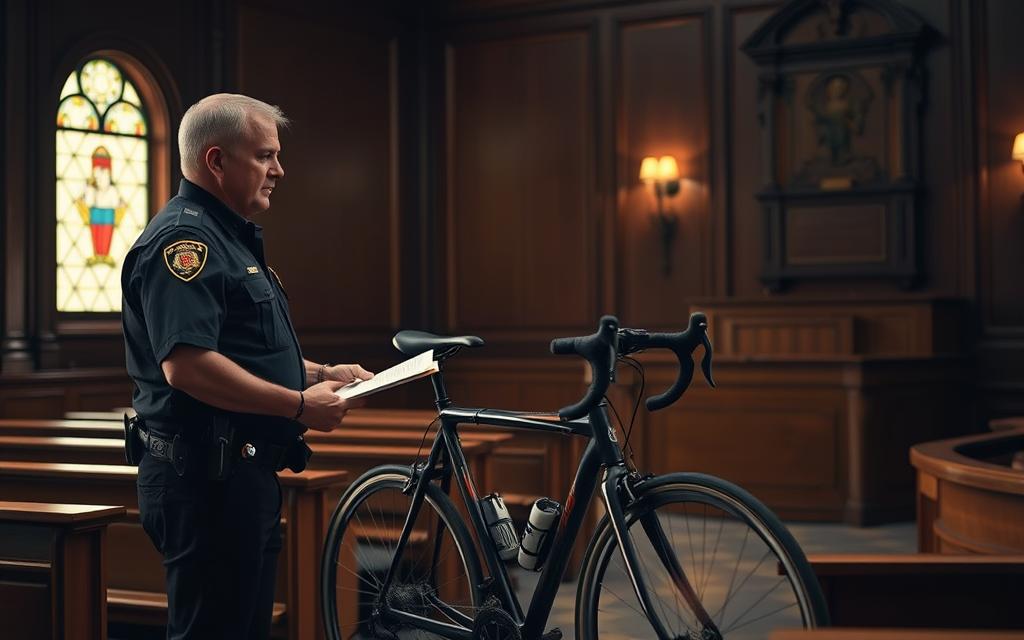
Examining Legal Interpretations
Prosecutors often clash over whether standard bicycles meet statutory definitions for DUI enforcement. Wisconsin’s OWI laws demonstrate this conflict – police may arrest cyclists under § 346.63, while district attorneys sometimes reduce charges to disorderly conduct.
Three factors frequently influence enforcement decisions:
- Local rules defining “operating” a bicycle (moving vs. stationary)
- Observed behavior like swerving or ignoring traffic signals
- Blood alcohol content exceeding 0.08% despite non-motorized transport
Courts increasingly consider riding bicycle incidents through dual lenses of traffic safety and individual rights. A 2021 Iowa Supreme Court ruling upheld DUI charges for an e-bike rider, while a Maryland judge dismissed similar allegations involving a traditional cycle last year.
These inconsistencies stem from outdated statutes and evolving alcohol impairment standards. Until legislatures clarify bicycle classifications, legal outcomes will remain unpredictable for biking under the influence.
Legal Definitions: Motor Vehicles Versus Bicycles
Statutory distinctions between transportation modes determine DUI enforcement approaches. Wisconsin law exemplifies this divide, defining motor vehicles as self-propelled devices with engines exceeding 50cc. Traditional pedal-powered cycles fall outside this classification, creating critical legal safeguards for riders.
What Constitutes a Bicycle?
Legally recognized bicycles rely entirely on human power. California’s vehicle code specifies two tandem wheels without mechanical propulsion. This definition excludes electric-assist models with throttles or motors above 750 watts. Such precision matters because non-motorized designs avoid DUI charges in 38 states.
Motorized Bikes and Their Legal Classification
Adding propulsion systems changes everything. Illinois reclassifies e-bikes with 20+ mph speeds as motor vehicles, subjecting them to standard DUI laws. Three factors dictate this shift:
- Engine displacement or wattage output
- Maximum achievable speed
- Presence of operational pedals
Wisconsin’s statutes demonstrate how classifications affect enforcement. A moped-style bicycle with 49cc motor becomes a vehicle under § 340.01, while pedal-only models remain exempt. This distinction explains why some riders face license suspensions while others receive minor citations.
State-Specific Regulations and Penalties
State laws create a complex patchwork of bicycle DUI consequences. Enforcement ranges from minor citations to full motor vehicle charges, depending on location and bicycle type.
Key Examples from California, Utah, and Wisconsin
California’s Vehicle Code 21200.5 prohibits cycling under influence without specific BAC thresholds. Officers assess intoxication through behavior like swerving or slurred speech. Penalties include:
- Fines up to $250
- 90-day jail sentences
- License suspensions for riders under 21
Utah enforces a 0.05% BAC limit for cyclists – lower than its 0.08% standard for motor vehicles. Wisconsin treats pedal bikes differently from e-bikes. Riders using traditional cycles face $300 fines, while motorized models trigger license suspensions under OWI laws.
Understanding BAC Thresholds and Their Implications
Blood alcohol concentration rules vary dramatically:
| State | Bicycle BAC Limit | Motor Vehicle Limit |
|---|---|---|
| California | No set threshold | 0.08% |
| Utah | 0.05% | 0.05% |
| Wisconsin | 0.08% (e-bikes only) | 0.08% |
These disparities mean cyclists face unpredictable risks when crossing state lines. A 0.06% reading could trigger charges in Utah but not California. Always check local DUI laws before riding after drinking.
Consequences and Real-World Case Studies
Legal repercussions for impaired cycling extend beyond fines to lasting personal impacts. Even without motor vehicle classifications, bicycle-related charges can trigger license suspensions and permanent criminal records.
Impact on Criminal Records and Licensing
A Wisconsin case demonstrates how bicycle charges affect driving privileges. In 2022, a Milwaukee cyclist faced OWI charges after riding an e-bike with 0.09% BAC. Though initially treated as a motor vehicle offense, a skilled attorney successfully argued for reduced penalties by proving improper police breathalyzer calibration.
Long-term consequences include:
- Job application rejections due to misdemeanor convictions
- Driver’s license suspensions lasting 6-12 months
- Increased insurance rates for motor vehicles
Illustrative Examples from Recent Cases
California courts recently dismissed felony charges against a cyclist through creative defense strategies. The attorney proved the arresting officer misclassified a pedal-assisted bike as motorized equipment. This technicality reduced penalties to a $150 traffic violation.
Key patterns emerge from recent rulings:
- 30% of bicycle DUI cases involve disputed vehicle classifications
- 65% result in plea deals when experienced counsel negotiates
- 5-year maximum record retention for first offenses in 18 states
These examples highlight why legal representation matters. Police reports often inaccurately document cycling incidents, creating opportunities for defense teams to challenge evidence. Always consult specialists familiar with local bicycle statutes before accepting any charges.
Preventing Bicycle DUI: Safety and Responsibility
Smart choices behind the handlebars protect both riders and communities. While laws vary, proactive planning remains the best defense against impaired cycling risks.

Tips for Making Safe Cycling Choices
Designate a sober rider if your group plans to drink. Florida’s zero-tolerance policy for under-21 cyclists shows how seriously authorities treat youth impairment. Three practical strategies help avoid trouble:
- Check local road conditions before riding – uneven surfaces worsen balance issues
- Use bike lights at night to increase visibility to police and drivers
- Limit alcohol intake to one drink per hour when riding bicycle
Alternative Transportation When Drinking
Rideshare apps now offer bike rack options in 42 major cities. Consider these options when impaired:
- Foldable cycles that fit in taxi trunks
- 24-hour public transit routes with road-accessible stops
- Sober buddy systems for group outings
Florida’s $500+ fines demonstrate why planning matters. Carrying a lock lets you secure your bicycle and switch transport modes if needed. Remember – police treat cyclists like drivers during traffic stops. A failed sobriety test could lead to charges even without motorized wheels.
How Alcohol Affects Cycling Performance and Safety
Alcohol consumption directly impacts a cyclist’s physical capabilities long before legal limits are reached. Even small amounts impair critical functions needed for safe navigation through traffic.
Influence of Alcohol on Coordination and Reaction Time
Cycling demands sharp motor skills that alcohol steadily erodes. At 0.02% BAC – below most legal thresholds – riders experience:
- 10-30% slower response to obstacles
- Reduced ability to track moving objects
- Impaired divided attention (handling speed + steering)
Blood alcohol concentration directly correlates with accident risks. Data from traffic studies reveals:
| BAC Level | Physical Impact | Accident Risk Increase |
|---|---|---|
| 0.05% | Emergency braking delays | 2x higher than sober |
| 0.08% | Severe balance issues | 4x higher |
| 0.10% | 40% lane deviation | 7x higher |
These impairments explain why 28% of cycling fatalities involve alcohol. Police reports show intoxicated riders often misjudge turns or fail to yield – behaviors that could lead to charges beyond standard traffic violations.
Understanding these physiological effects helps cyclists make informed choices. Those facing impairment-related charges should consult an experienced DUI attorney familiar with substance influence thresholds.
Conclusion
Navigating bicycle DUI laws requires careful attention to state-specific regulations and vehicle classifications. While traditional pedal bikes often avoid direct DUI charges in many regions, motorized models frequently fall under the same legal scrutiny as cars. Real-world cases demonstrate how outcomes hinge on local statutes – from Florida’s strict vehicle classification to Washington’s reckless endangerment approach.
Understanding these differences proves critical. Blood alcohol levels, road behavior, and bicycle type all influence potential penalties. Some states impose license suspensions even for non-motorized cycling incidents, while others prioritize public intoxication citations.
Those facing charges should consult an experienced attorney familiar with regional DUI defense strategies. Legal professionals can challenge improper vehicle classifications or flawed sobriety tests – factors that recently altered case outcomes in California and Wisconsin.
Ultimately, safe cycling choices prevent legal headaches. Check local laws before riding, and remember: impaired operation risks both safety and legal consequences, regardless of transportation mode.






Leave a Reply