

Ever thought about getting your health story in a snap? Getting your medical records is more than a formality. It’s your right to know and manage your health fully.
Your medical records hold key info about your health, treatments, and genes. Knowing how to get them lets you make better health choices. It also ensures your health info is right wherever you go.
This guide will show you how easy it is to get your health records. It’s not hard, even if it seems that way. You might need them for tracking, getting a second opinion, or for insurance. Knowing how to get your medical records is a must for every patient.
Key Takeaways
- Medical records are your legal right to access
- Multiple methods exist for retrieving health information
- Federal laws protect your right to access records
- Electronic systems have simplified record retrieval
- Understanding your records helps better health management
Understanding Medical Records
Medical records are detailed documents that show your health journey. They have important info about your health, treatments, and care. Knowing what’s in these records helps you manage your health better.
A Personal Medical File has many parts. These parts give a full view of your health:
- Patient demographic information
- Medical history and previous diagnoses
- Vaccination records
- Laboratory test results
- Prescription medication details
- Surgical procedures and hospitalizations
- Imaging study reports
What Constitutes Medical Records?
A Health Care Records Request includes many types of documents. These come from doctors, hospitals, clinics, and more.
| Record Type | Information Included |
|---|---|
| Clinical Notes | Physician observations and treatment plans |
| Diagnostic Reports | X-rays, MRI, blood test results |
| Prescription History | Medications, dosages, and pharmacy details |
Importance of Accessing Your Records
Keeping your Medical History Request up-to-date is key. Patients who manage their records well can:
- Ensure accurate info for all doctors
- Track their health over time
- Make smart choices about treatments
- Be ready for medical emergencies
- Help doctors talk to each other smoothly
By knowing and managing your medical records, you take a big step in your health journey.
Legal Rights to Access Medical Records
Getting medical records can be hard. The Health Insurance Portability and Accountability Act (HIPAA) helps a lot. It’s key to know your HIPAA Medical Rights to manage your health well.
Patients have clear Legal Right To Medical Records. These laws help you get and check your health info. They make sure you know what’s going on with your health.
HIPAA Guidelines Overview
HIPAA sets rules for getting medical records. Important parts include:
- Right to inspect and obtain copies of medical records
- Protection against unauthorized disclosure of health information
- Ability to request corrections to inaccurate medical records
- Limitations on how healthcare providers can share patient information
Your Rights as a Patient
Patients have many rights to their medical records. These rights are:
- Prompt Access: Healthcare providers must respond to record requests within 30 days
- Receiving copies of medical records in preferred format
- Requesting electronic copies of health information
- Understanding possible fees for getting records
HIPAA keeps your health info private but also lets you see it. You can ask for your medical records with confidence. Federal laws back you up in getting all your health info.
Ways to Request Medical Records
Getting your medical records is now easy with many ways to do it. You can pick from different options to get your Doctor Office Records Request. Each method is designed for different needs and tech levels.
Understanding how to get your medical info is key. There are many ways to submit a Medical Records Request Form.
In-Person Requests
Visiting your doctor’s office is a classic way to get records. Here’s what to do:
- Bring a valid photo ID
- Complete the Medical Records Request Form at the office
- Provide specific details about requested records
- Be prepared to pay any fees
Written Requests
Written requests are a formal way to get your medical records. Your request should have:
- Full legal name
- Date of birth
- Contact information
- Specific records you want
- How you want them delivered
Online Medical Record Access
Digital portals have changed how we get medical records. Many doctors offer Online Medical Record Access through patient portals.
| Portal Feature | Benefits |
|---|---|
| 24/7 Access | View records anytime |
| Secure Platform | Encrypted personal health information |
| Instant Downloads | Quick record retrieval |
Pick the method that fits your comfort and tech skills for medical records.
Identifying the Right Contact
Finding the right person to talk to for medical records can be hard. It’s important to know who to call when you need records from hospitals or doctors. Each place has its own rules for getting records.
Every place is different when it comes to getting your medical info. Knowing who to talk to can make it easier to get your records.
Key Contacts for Medical Record Requests
- Hospital Medical Records Department
- Individual Healthcare Provider’s Office
- Clinic Administration
- State Medical Societies
Finding Your Healthcare Provider’s Information
Here’s how to find the right person for your medical records:
- Look on your doctor’s website
- Call your health insurance
- Use online directories
- Try the main office number
If you can’t reach your doctor, there are other ways to find your records:
| Resource | Contact Method | Potential Success Rate |
|---|---|---|
| State Medical Board | Online Directory | High |
| Health Insurance Provider | Customer Service | Medium |
| Local Medical Societies | Phone/Email | Medium-High |
Pro Tip: Have your ID and medical info ready when you ask for records. It helps things go faster.
Information Required for Request
Getting access to your health file can seem hard. But, knowing what you need for a Health Data Request makes it easier. A good Medical Records Checklist helps you get all the right info before you ask for your records.
When you ask for your medical records, you need to have certain documents ready. This makes sure you get your records without any trouble.
Essential Personal Details
To start a Health Data Request, you must give some important personal info:
- Full legal name
- Date of birth
- Social security number
- Contact phone number
- Current mailing address
Specific Records Documentation
Some medical records need extra documents:
| Record Type | Additional Documentation Required |
|---|---|
| Personal Medical History | Government-issued photo ID |
| Minor’s Records | Parental consent form |
| Third-Party Request | Signed authorization form |
Make sure to check your Medical Records Checklist well. Missing info can cause big delays.
Fees Associated with Medical Record Requests
Getting your medical records can be hard. It’s important to know the costs. This helps patients get their health reports without spending too much.

Medical places charge for making copies of your records. The price depends on a few things:
- Copy format (paper or electronic)
- Number of pages you want
- How you want them delivered
- The rules of your healthcare provider
Understanding Possible Charges
HIPAA lets providers charge for copying records. These costs usually include:
| Fee Type | Typical Cost Range |
|---|---|
| Copying Charges | $0.10 – $0.50 per page |
| Electronic Record Transfer | $6.50 – $25.00 |
| Labor for Processing | $20 – $50 per request |
When Fees Can Be Waived
Some times, you might not have to pay:
- Continued medical treatment
- Showing you can’t afford it
- First time asking for your health info
- Checking insurance claims
Always talk to your doctor about costs. They can tell you about fees and when you might not have to pay. This is important when you’re asking for your health records.
Processing Time for Requests
Getting your medical records takes time. When you ask for your Patient Records Access, healthcare providers have rules. They must follow these rules when they handle your Medical History Request.
Healthcare providers must answer your request within a set time. If you want to Get Health Records, be ready for different times.
Typical Timeframes for Medical Record Requests
The time it takes to get medical records goes through several steps:
- First, you send in your request. This takes 1-3 business days.
- Then, they gather your records. This can take 10-20 business days.
- After that, they review and send your records. This can take up to 30 days in total.
Managing Possible Delays in Record Requests
If your request is delayed, here’s what you can do:
- Call the medical records department.
- Make sure you’ve given them everything they need.
- Ask for an update in writing.
- If you don’t hear back, try calling them.
When you ask for your medical records, you have rights. Being persistent and polite helps get your records faster.
| Request Type | Typical Processing Time | Additional Notes |
|---|---|---|
| In-person request | 1-5 business days | Fastest method for immediate needs |
| Written request | 10-30 days | Requires complete documentation |
| Electronic request | 5-15 business days | Most convenient for digital access |
Special Considerations for Minors
Handling medical records for kids is tricky. It needs special rules and laws. Parents and guardians must know these rules to manage health info.
Parents and guardians have rights when asking for health info for kids. The HIPAA Medical Rights guide helps with this. It tells us how to get and manage health info for kids under 18.
Parental Rights and Record Access
Parents usually get to see their kids’ medical records. But, there are times when they can’t. This is true for very private health info:
- Mental health treatment records
- Sexual and reproductive health services
- Substance abuse treatment
Transitioning to Adult Medical Records
When kids grow up, they need to take control of their health records. Here’s what to do:
- Learn when you can take control of your records
- Talk to your doctor about moving records
- Learn how to manage your health
- Get copies of your health history
Doctors keep records until you’re an adult. This age can be 18 or 21, depending on where you live.
Medical Records from Multiple Providers
Getting medical records from different places can be hard. It’s even harder when you have to deal with many providers. Each might use a different system for their records.
Patients face big challenges when trying to put all their medical history together. The Hospital Portal Guide offers some tips to make it easier:
- Ask each healthcare place for your records
- Use personal health record (PHR) platforms
- Leverage health information exchanges (HIEs)
- Keep a personal medical record binder
Challenges in Record Consolidation
Every healthcare system has its own problems with managing records. Electronic medical record access can be very different. Each place might use its own software and ways to document.
Effective Solutions for Record Management
To overcome these problems, patients can take action:
- Reach out to each healthcare provider’s records office
- Get written permission forms
- Ask for digital copies if you can
- Use patient portals to track your records
Putting together medical records from many places takes time and effort. By learning about EMR Access Guide, patients can make a complete health record. This helps with better care and managing your health.
Electronic Health Records (EHR)
Digital healthcare is changing how we get and use our medical info. Electronic Health Records (EHR) have made it easier for people to get their health records online.

Today, doctors use online platforms that make it simple to get your medical records. These systems give you control over your health info like never before.
Advantages of Electronic Access
- Instant access to your full medical history
- Secure sharing with your doctors
- Updates to your health info in real time
- No more lost or misplaced records
How to Navigate EHR Systems
Here’s how to use the EMR Access Guide:
- Make a patient portal account with your doctor
- Use secure ways to prove who you are
- Learn how to use the digital system
- Know how to keep your info private and safe
| EHR Feature | Patient Benefits |
|---|---|
| Secure Login | Safe access to your health info |
| Record Viewing | Get your full medical history easily |
| Appointment Management | Manage your doctor visits easily |
When using EHR systems, be confident and careful. Always keep your login info safe. Also, check your medical records often to make sure they’re right.
Medical Records Processing Through Third Parties
Dealing with medical records can be tough. Health Data Request needs sometimes help from third-party services. These services make managing medical info easier.
Third-party services for medical records are great for patients. They help get, organize, and share medical papers easily. This makes things less stressful for people.
When to Use a Health Information Exchange
Health information exchanges are important in many situations:
- Switching healthcare providers
- Combining medical records from different places
- Getting ready for big medical treatments
- Handling long-term health issues
Choosing the Right Third-Party Service
When picking a Medical Records Request Form service, think about these things:
- HIPAA Compliance: Make sure the service follows strict privacy rules
- How they keep your info safe
- How fast they get your records
- If it’s affordable
- If their online tools are easy to use
Services like ChartRequest are experts in safe, legal medical record getting. They make it easy to get your health papers. This helps patients manage their health info better.
Tracking Your Request
Getting your Patient Records Access can feel like a maze. Tracking your Medical Records Request Form helps you get your health records fast. This way, you avoid delays.
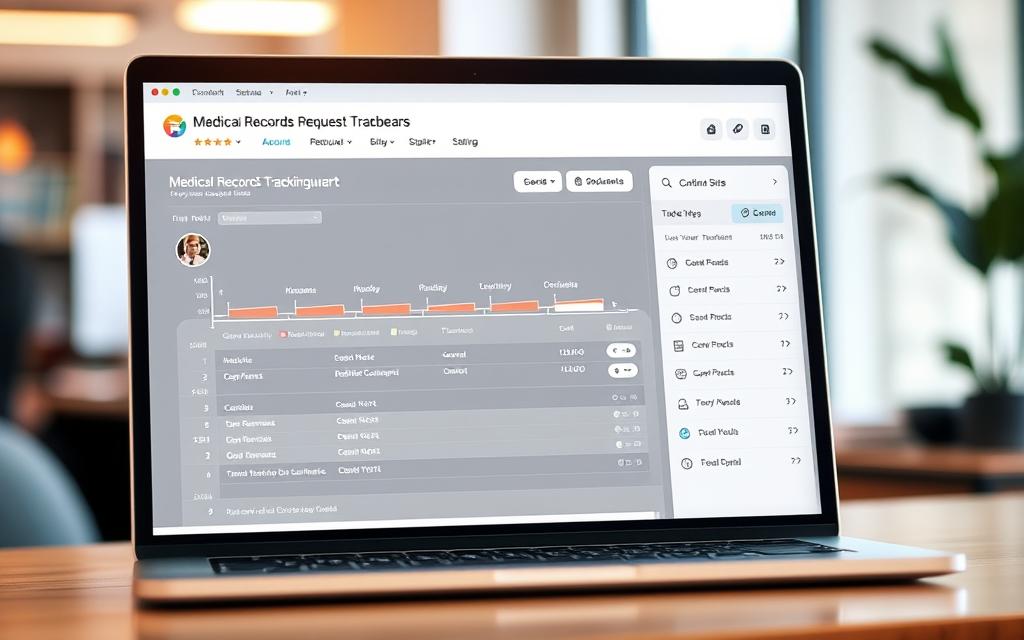
- Create a tracking system for your medical record requests
- Document the date of your initial request
- Record the contact information of the healthcare provider
- Set reminder dates for follow-up communications
How to Follow Up Professionally
When you follow up, be professional and persistent. Prepare important information:
- Your full name and date of birth
- Specific records you want
- Date of your original request
- Reference or confirmation number (if given)
Ensuring Your Request is Processed
Medical record departments get many requests. To get your records:
- Call the medical records department
- Send a polite but firm email
- Ask for a status update in a few days
- Keep copies of all your messages
If you can’t get your records, ask the healthcare provider’s patient relations or compliance office for help.
Privacy Concerns and Security
Keeping your medical info safe is very important today. HIPAA Medical Rights help protect your health data. They make sure your info stays private and safe.
Medical Privacy Laws give clear rules for handling your health info. Knowing these rules makes patients feel safer when they get their medical records.
Keeping Your Information Safe
There are steps you can take to keep your medical info safe:
- Make sure anyone asking for your records is who they say they are.
- Use safe online places to look at your records.
- Ask for a HIPAA Form Example when you share your info.
- Don’t share too much of your health details.
Protecting Your Privacy During Access
Here are important steps to take when you ask for your medical records:
- Always use encrypted ways to talk to doctors or hospitals.
- Ask who looked at your records.
- Know your rights under HIPAA Medical Rights.
- Keep copies of all papers about your record requests.
Today, digital places have better security. This makes it safer to look at your medical records. By being careful and informed, you can keep your health info safe and private.
What to Do If Records Are Incorrect
Discovering errors in your medical records can be frustrating. HIPAA Medical Rights give patients the right to review and ask for corrections. It’s important for getting the right medical treatment and avoiding health problems.
Start by asking for a copy of your full medical record from your doctor. Look over each document carefully. If you find mistakes, use a HIPAA Form Example to ask for changes.
Initiating the Correction Process
Doctors usually want to fix mistakes. Write a formal letter about the errors. Include proof like test results or doctor’s notes. Be clear and polite, saying what needs to be fixed.
Filing Official Complaints
If your doctor won’t fix the mistakes, you can complain to the U.S. Department of Health and Human Services. They enforce HIPAA and can look into your case. Remember, doctors don’t have to change professional opinions in your records.






Leave a Reply