

Ever thought about what happens when a family member feels cheated by a will? Contesting a will after someone dies is a tough legal path. It can change who gets what and how families relate to each other.
Probate litigation is like navigating a maze. To contest a will, you need to know the legal reasons and when to act. There are only a few chances to change who gets what from an estate.
Families facing will disputes need a smart plan. Each state has its own rules for contesting a will. Getting help from a lawyer is key if you want to challenge a will.
Key Takeaways
- Will contestation requires substantial legal evidence
- Timing is critical in challenging a will’s validity
- Legal grounds must be clearly demonstrated
- Professional legal counsel significantly improves contestation chances
- Emotional and financial costs must be carefully considered
- Understanding probate laws is essential for successful challenges
Understanding the Basics of Will Contestation
Dealing with inheritance can be tough, like when you want to challenge a will in court. You need to know the steps and how to approach it. Not every will is safe from legal fights. It’s key to know about will contestation to protect your rights.
Will contestation lets some people question a deceased person’s last wishes. It looks at how the will was made and signed.
What is Contesting a Will?
Challenging a will means questioning its legal right to be followed. Who can contest a will depends on legal rules and their connection to the deceased.
Common Reasons for Contestation
- Suspected lack of mental capacity when creating the will
- Evidence of undue influence or coercion
- Improper execution of legal documents
- Suspicion of fraud or forgery
Who Can Contest a Will?
Not everyone can challenge a will. Usually, the following can:
| Potential Contesters | Relationship to Deceased |
|---|---|
| Spouse | Legal or common-law partner |
| Children | Biological or legally adopted (excluding stepchildren) |
| Named Beneficiaries | Individuals directly mentioned in the will |
| Potential Heirs | Those who would inherit under intestacy laws |
Knowing these basics helps you understand will contestation. It helps you see if you have legal options.
Legal Grounds for Contesting a Will
Challenging a will means looking at legal reasons it might be wrong. It’s important to check if a will is fair and legal.

When you contest a will, you need strong reasons to say it’s not valid. Families looking for invalid will legal help must know why a will can be challenged.
Lack of Testamentary Capacity
Testamentary capacity is about the maker’s mind. For a will to be good, the person must:
- Know about their stuff
- Know their family
- Get the will’s legal stuff
- Make choices without being confused
Undue Influence in Wills
Undue influence happens when someone forces changes in a will. Signs include:
- Keeping the will-maker alone
- Big changes in who gets what
- The will-maker depends on someone too much
Improper Execution of the Will
Will fraud can come from mistakes in making the will. Important steps include:
| Requirement | Details |
|---|---|
| Witness Signatures | At least two witnesses needed |
| Testator’s Signature | The maker must sign it |
| Legal Format | Follows state laws |
Knowing these points helps protect your rights. It lets you fight against unfair or bad wills.
The Importance of Timing in Contesting a Will
When you want to challenge a will, timing is very important. The rules for contesting a will are strict. They vary by state and place.
To know when to contest a will, you must pay close attention to the law. Each state has its own rules. These rules tell you how fast you must start a will contest after probate starts.
Critical Filing Deadlines
The contest will process needs quick action. Most places have strict time limits:
- Typically 30-90 days after will probate begins
- Some states allow up to two years for certain challenges
- Specific deadlines depend on individual state laws
Why Quick Action Matters
Waiting too long to contest a will can mean you lose your chance. Courts are strict about time limits. They don’t care if your claim is valid.
| State | Typical Contest Deadline | Special Circumstances |
|---|---|---|
| California | 120 days | Extended for fraud cases |
| New York | 6 months | Longer for non-resident beneficiaries |
| Florida | 90 days | Mental incapacity exceptions |
Talking to a skilled probate lawyer is a good idea. They can help you understand the rules. This way, you can challenge a will the right way.
How to Start the Contestation Process
Dealing with heir rights after death can be tough. It’s even harder when there’s a chance of an estate dispute. Knowing the first steps to contest a will is key for those who want to challenge a deceased person’s wishes.
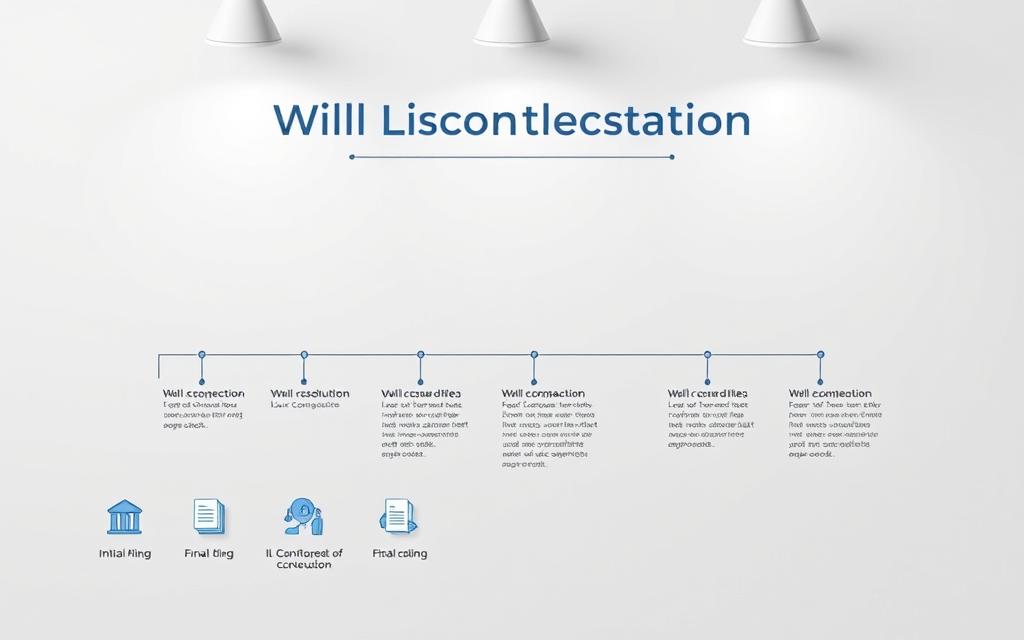
Resolving estate disputes needs careful planning and smart actions. Before starting legal steps, it’s important to prepare well. This helps build a strong case.
Gathering Critical Documentation
To contest a will well, you need all the right documents. Here are some important ones:
- Original copy of the will
- Recent medical records of the deceased
- Financial statements
- Previous versions of the will
- Correspondence related to estate planning
Professional Legal Consultation
Getting advice from a skilled estate litigation attorney is essential. They can:
- Check if your claim is strong
- Find legal reasons to contest the will
- Explain the timeline and risks
- Plan your strategy
Filing the Contestation
| Step | Action Required | Typical Timeframe |
|---|---|---|
| 1. Initial Consultation | Meet with estate litigation lawyer | 1-2 weeks |
| 2. Document Preparation | Compile supporting evidence | 2-4 weeks |
| 3. File Contestation | Submit formal legal challenge | Within probate court deadlines |
When you file a contestation, make sure your documents are right. Also, submit them on time. Timing is critical in will contest proceedings.
The Role of the Probate Court
The probate court is key in handling will disputes. It makes sure a person’s last wishes are followed. This court is where estate disputes are solved.

When a will dispute happens, the court steps in. It deals with legal issues and checks if the will is valid. The probate court has many important jobs:
- Checking if the will is real
- Picking an executor
- Handling disagreements between heirs
- Making sure the estate is divided fairly
What Occurs During Probate Court Proceedings
The court looks at the will carefully. If someone contests it, they must show strong evidence. The court looks at things like:
- If the person who made the will was of sound mind
- If someone else influenced them too much
- If the will was legally made
Impact of Contestation on Probate Process
A will dispute can slow down the estate settlement. Contestation adds complexity that can delay things. The court looks at all the evidence to make a fair decision.
| Probate Court Action | Typical Duration | Potential Outcome |
|---|---|---|
| Initial Will Review | 1-3 months | Validation or Initial Challenge |
| Detailed Hearing | 3-6 months | Evidence Examination |
| Final Resolution | 6-12 months | Will Upheld or Modified |
If you’re in a probate dispute, get a good lawyer. They can help you through the court system. A good lawyer can help you win your case.
Evidence Required to Contest a Will
Challenging a trust or will needs strong evidence. You must gather detailed documents to show the will is not valid or to point out elder abuse.
To prove a will is invalid, certain evidence is key. The success of your case depends on the quality and relevance of your documents.
Types of Evidence to Gather
- Financial records showing suspicious transactions
- Communication documents between the deceased and possible influencers
- Psychological evaluations of the testator
- Witness statements from family members
Witness Testimonies
Witnesses are very important in will challenges. People who know about the testator’s mind or if someone influenced them are very helpful.
| Witness Type | Potential Contribution |
|---|---|
| Family Members | Insight into testator’s relationships |
| Medical Professionals | Mental capacity assessment |
| Caregivers | Daily interaction observations |
Medical Records
Medical records are key when contesting a will because of mental state. They can show if someone’s mind was not clear or if they were being controlled.
Lawyers say to get all medical records. This includes tests on the mind, checks on the brain, and notes from doctors. These can show if the person making the will was not in their right mind.
Possible Outcomes of Contesting a Will
Going through a will contest can be tough and emotional. There are many possible results when someone challenges a will. Knowing these can help people get ready for what’s ahead.
How assets are handled in a dispute depends on many things. This includes the legal reasons and the evidence. Courts look at each case carefully to decide the best outcome.
Scenarios in Will Contestation
Those trying to contest a will should know about three main results:
- Will Remains Fully Upheld
The original will stays the same. All the assets are given out as the deceased planned.
- Partial Will Modification
Courts might change some parts of the will. But they keep the main idea the same. This could mean giving some assets differently or removing bad parts.
- Intestate Succession
If the will is seen as totally wrong, the state decides who gets what. Usually, close family members get the inheritance based on laws.
Potential Impact on Estate Distribution
The result of a will contest can really change things for beneficiaries. If the challenge is successful, assets might be given out differently. This could change family relationships and money plans.
Legal experts say to be well-prepared and have realistic hopes when fighting a will contest. Every case is different, with its own challenges and solutions.
The Costs Involved in Contesting a Will
Going through a will challenge can be costly. It’s important to know the costs before starting. This helps you decide if it’s worth it.
Challenging a will has many financial parts. These can add up quickly. It’s key to think about these costs before moving forward.
Legal Fees Breakdown
Legal advice for will contests often comes with different prices:
- Hourly rates are between $250 to $500 per hour
- Flat fees for easier cases
- Contingency fees based on what you might get back
Comprehensive Court Costs
Court costs can change a lot. They depend on how complex the case is. Here are some common costs:
| Cost Category | Estimated Range |
|---|---|
| Filing Fees | $100 – $500 |
| Expert Witness Fees | $500 – $5,000 |
| Deposition Costs | $500 – $2,000 |
Potential Cost Recovery
Winning a will challenge might let you get back some legal costs. Courts might pay legal fees to the winner. But, this isn’t always the case.
Think hard about the money you might spend. Compare it to how likely you are to win. This is important when thinking about a will contest.
Common Misconceptions About Will Contestation
Contesting a will after someone dies can be tough. Many people think wrong things that can mess up their chances. This can lead to legal problems they didn’t expect.
When thinking about contesting a will, people often get things wrong. They don’t know their rights or the process. Let’s look at some common myths that can affect your will contestation.
Debunking Will Contestation Myths
- Myth: Anyone can contest a will at any time
Reality: Only certain people can challenge a will. This includes close family or named beneficiaries within a short time.
- Myth: Verbal promises override written wills
Reality: Courts usually go with what’s written, not what was said, in inheritance disputes.
- Myth: A will can be contested simply because it seems unfair
Reality: You need strong proof of issues like the person not being able to make decisions or being pressured.
Understanding the Real Risks
Challenging a will comes with big risks. If you lose, you might:
- lose your chance at inheritance
- face big legal bills
- hurt your family ties
- feel stressed and upset
Before you try to contest a will, think hard about why and what you have to prove. Getting advice from a lawyer is very important. They can tell you if your case is strong.
Alternative Dispute Resolution for Will Disputes
Dealing with estate disputes can be tough for families. It’s not just about going to court. There are other ways to solve problems.
Mediation is a big help for families upset about wills. It’s a way to talk things out and find a solution everyone can agree on.
Comparing Mediation and Litigation
Mediation and court fights are different in many ways:
- Mediation costs less money
- It’s private, not public like court
- You have more say in how things are solved
- It helps keep family ties strong
Benefits of Mediation in Will Contestation
Mediation has special benefits for solving will disputes:
- It’s faster than court fights
- It’s less stressful and cheaper
- It fits the needs of each family
- It lets everyone talk and understand each other
Mediation can turn a bad legal fight into a chance for families to talk and work together.
Ensuring Your Own Will is Contest-Proof
Making a strong will that can’t be challenged needs careful planning. It’s important to know how to stop someone from contesting your will. Legal experts say working with a professional is key to good estate planning.
Creating a will that can’t be legally fought is all about being clear and precise. Talking to a will contest lawyer makes sure your wishes are clear. You should pick a living trust attorney who knows the laws in your area well.
Crafting a Strong Legal Document
It’s important to check and update your will often. Big changes in your life, like getting married or having a child, can change your will. Experts say to check your will every three to five years or after big life changes.
Proactive Protection Strategies
To lower the chance of challenges, think about adding a no-contest clause. Also, make sure you follow all legal steps carefully. Getting help from a lawyer can make your estate plan stronger and more secure.



Leave a Reply