


Have you ever wondered why many Americans want to avoid probate court? Probate can turn a simple inheritance into a big mess. It’s full of paperwork, costs, and public attention.
Going through probate can be really hard for families after losing a loved one. Many don’t know there are smart ways to avoid probate court. These ways help protect your family’s money.
Probate avoidance strategies aren’t just for the rich. They help families of all sizes save time, money, and stress. Knowing how to avoid probate can really help keep your assets safe and your loved ones protected.
Key Takeaways
- Probate can be time-consuming and expensive
- Multiple legal strategies exist to bypass probate
- Estate planning is key for asset protection
- Trusts and joint ownership can avoid probate
- Getting help from a lawyer can make things easier
Understanding Probate and Its Implications
Probate is a big deal in estate management. It’s how we transfer things after someone dies. Knowing about probate helps with estate planning and keeps your family safe financially.
Probate is a court process that checks a will and gives out assets. It has several steps that change based on the state’s laws:
- Authenticating the deceased’s will
- Appointing a personal representative
- Identifying and inventorying the deceased’s property
- Appraising the estate’s value
- Paying outstanding debts and taxes
- Distributing remaining assets to heirs
What Exactly Is Probate?
More people are choosing probate-free estate planning. They avoid the long, slow probate process. Each state has its own rules, making things even harder.
| Probate Characteristic | Impact |
|---|---|
| Duration | 6-18 months on average |
| Public Record | All documents become publicly accessible |
| Cost | 3-7% of estate value |
Why People Seek to Avoid Probate
Many want to skip probate because of its downsides. The process is costly, slow, and hard on families. Legal fees, court costs, and family fights can use up the estate’s money and cause stress.
Learning about probate helps you plan better. You can find ways to protect your assets and make things easier for your family.
The Role of Estate Planning

Estate planning is key to protecting your money and making sure your wishes are followed after you’re gone. It helps you deal with legal issues and avoid family fights.
Good estate planning is more than just who gets what. It’s about planning your financial future, keeping your loved ones safe, and controlling your property.
Creating a Comprehensive Will
A good will is the base of any estate plan. It’s your main way to share your final wishes. A strong will has:
- Clearly identifying beneficiaries
- Specifying asset distribution
- Naming guardians for minor children
- Designating an executor
Understanding the Importance of Trusts
Revocable living trusts are big in estate planning. They let you control your assets and skip the long probate process.
The main perks of revocable living trusts are:
- Maintaining privacy of asset distribution
- Reducing legal problems
- Offering flexibility in managing assets
- Potentially lowering taxes
Getting help from a lawyer is very important. They can make an estate plan that fits your money situation and family.
Revocable Living Trusts
Estate planning helps keep your assets safe and makes sure they go to your loved ones smoothly. A key tool for this is a revocable living trust.
A living trust helps you manage your estate without probate. It’s flexible and lets you keep control. Unlike wills, it makes transferring assets easier.
How Revocable Living Trusts Function
Here’s how revocable living trusts work:
- The grantor makes and funds the trust
- Assets are moved into the trust’s name
- The grantor is the first trustee
- Beneficiaries get the assets
Key Benefits of Revocable Living Trusts
People choose revocable living trusts for good reasons:
- Probate Avoidance: Assets go straight to beneficiaries without court
- Privacy Protection: Trust documents stay private, unlike probate records
- Flexibility: Trusts can change as life does
- Continuous Management: Keeps asset management going if you can’t
With a revocable living trust, you can plan for a probate-free inheritance. This protects your family’s financial future.
Joint Ownership of Property
Joint ownership is a smart way to avoid probate. It lets property owners pass on assets easily and avoid legal issues. Knowing how it works can help protect your property and make inheritance smoother.
There are many types of joint ownership, each with its own benefits. The best choice depends on your situation and goals.
Types of Joint Ownership Arrangements
- Joint Tenancy with Rights of Survivorship (JTWROS): Allows complete property transfer to surviving owner
- Tenancy by the Entirety: Specific to married couples with automatic inheritance rights
- Community Property with Right of Survivorship: Protects shared marital assets
Advantages and Considerations
Joint ownership has many perks for managing probate and estate transfers:
- Immediate asset transfer upon death
- Reduced legal expenses
- Simplified inheritance process
But, there are downsides too. There might be tax issues and less control over the asset. Talking to a financial advisor can help pick the right joint ownership for you.
Planning carefully is key to using joint ownership well. It helps manage your estate and avoid problems with asset transfer.
Utilizing Beneficiary Designations
Protecting your assets from probate is key. Beneficiary designations help transfer wealth directly to loved ones. This way, you avoid long legal processes.
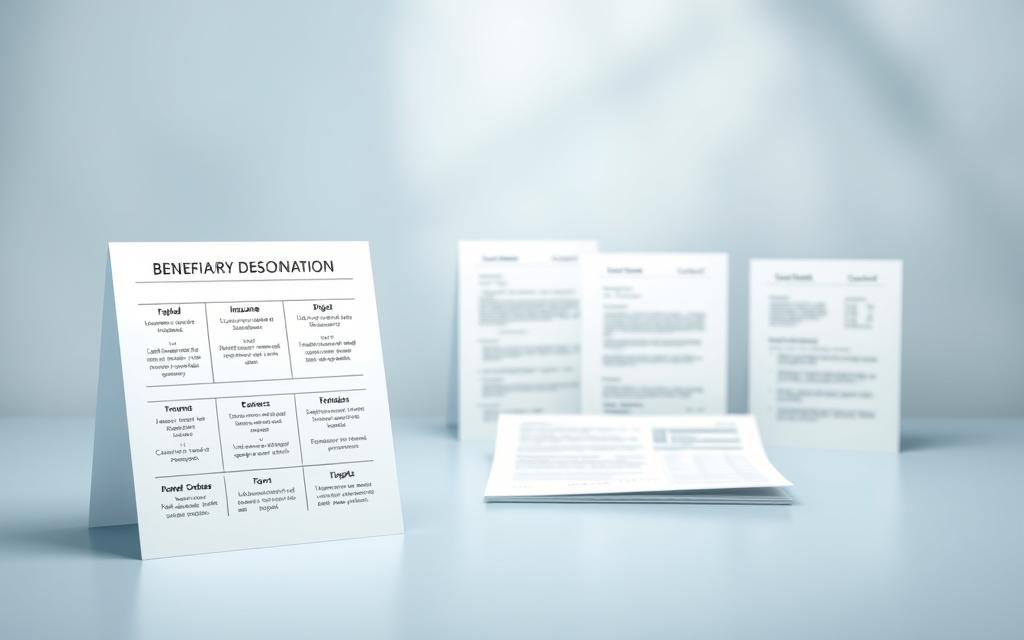
Smart estate planning means using probate bypass methods. Beneficiary designations make transferring assets easy. They let you manage accounts and investments without court help.
Financial Accounts and Investment Strategies
Many financial tools allow direct transfers:
- Payable-on-Death (POD) bank accounts
- Transfer-on-Death (TOD) investment accounts
- Securities with named beneficiaries
Life Insurance Policy Beneficiary Considerations
Life insurance is key in estate planning. It lets you transfer wealth right away to your chosen ones. This avoids probate problems.
| Account Type | Probate Bypass Method | Immediate Transfer |
|---|---|---|
| Bank Accounts (POD) | High | Yes |
| Investment Accounts (TOD) | High | Yes |
| Life Insurance | Complete | Immediate |
When setting up beneficiary designations, remember these critical tips:
- Check them every year
- Update after big life changes
- Don’t name minors directly
- Match with your overall estate plan
Planning ahead with beneficiary designations ensures your assets go where you want. They get there fast and efficiently.
Gifting During Your Lifetime
Estate planning tools help avoid probate costs. They do this by smartly sharing assets. Giving gifts during your life is a key way to help loved ones and avoid probate problems.

Learning about lifetime gifting is important. It helps people avoid probate and lower estate taxes. By giving gifts wisely, you can share wealth and keep your finances strong.
Annual Gift Tax Exclusion
The IRS sets rules for tax-free gifts. This can lower probate costs. For 2023, you can give up to $17,000 to each person without paying federal gift tax.
- Individual annual gift limit: $17,000
- Married couples can gift up to $34,000 per recipient
- Gifts reduce overall taxable estate value
Potential Risks of Gifting
Gifting has big benefits, but it also has risks. You need to think about these carefully.
| Gifting Consideration | Potential Impact |
|---|---|
| Asset Control | Permanent transfer of ownership |
| Medicaid Eligibility | Potential disqualification period |
| Tax Implications | Possible future tax consequences |
Talking to an estate planning expert is smart. They can help you make a gifting plan that fits your financial goals.
Real Estate Strategies
Real estate is often the biggest asset in many estates. It’s important to plan carefully to avoid probate and protect your family’s money. Knowing about transfer on death deeds can make estate planning easier and give you peace of mind.
Transferring Deeds Without Probate
A transfer on death deed is a great tool for avoiding probate. It lets homeowners choose who gets their property after they die. This way, the probate process is skipped.
- Available in select states
- Maintains current property ownership
- Enables direct property transfer to heirs
- Remains revocable during owner’s lifetime
Life Estate Deeds: Another Probate Avoidance Strategy
Life estate deeds are another smart way to avoid probate. They let property owners give their property to someone else. But the owner gets to keep living in the property for their life.
Life estate deeds have many benefits:
- Immediate property transfer expectations
- Continued residential rights
- Potential tax advantages
- Simplified inheritance process
Talking to an estate planning attorney can help you find the best strategy for your real estate. They can help you plan without probate.
Using Payable-on-Death Accounts
Estate planning can be hard, but payable-on-death accounts make it easy. They help keep your money safe and let your loved ones get it fast after you’re gone.
How Payable-on-Death Accounts Function
Payable-on-death accounts let you pass money to people you choose without probate. You pick who gets the money when you die.
- Applicable to savings and checking accounts
- Certificates of deposit can be POD accounts
- Immediate transfer of funds to beneficiaries
Advantages of POD Accounts
These accounts are great for estate planning. They let you move money easily and keep control of it while you’re alive.
| Benefit | Description |
|---|---|
| Quick Transfer | Beneficiaries receive funds immediately |
| Low Cost | No legal fees associated with probate |
| Flexibility | Can be changed or updated anytime |
When you set up payable-on-death accounts, talk to a financial advisor. They help make sure they fit your estate plan. Each account is key to keeping your money safe.
The Importance of Regular Updates
Keeping your estate plan up to date is very important. Life changes fast, and your estate plan must keep up. This helps avoid probate after death.
It’s key to review your estate plan often. This makes sure it matches your current life and money goals. If you don’t update, your assets might face probate risks.
Timing for Estate Plan Reviews
Experts say to check your plan every 3-5 years. Some big life events mean you should review it right away:
- Marriage or divorce
- Birth of children or grandchildren
- Big changes in money status
- Move to a new state
- Big career changes
Life Changes That Demand Updates
Knowing when to update your estate plan is key. Update it during these times:
| Life Event | Potential Estate Plan Impact |
|---|---|
| Marriage | Update who gets what |
| Divorce | Take out ex-spouse |
| Inheritance | Change who gets what |
| Starting a Business | Add business assets |
By keeping your estate plan up to date, you protect your family’s money. This also helps avoid probate problems.
Seeking Legal Guidance
Going through estate planning can be very complex. It’s important to get help from a skilled estate planning lawyer. They know the detailed probate laws in each state.
Finding the Right Estate Planning Attorney
Finding the right lawyer is key. They should help you through the estate planning process. They should know all about the tools and strategies you need.
- Check state bar association recommendations
- Review attorney specializations in estate planning
- Verify professional credentials and experience
- Read client testimonials and reviews
Essential Questions for Your Attorney
When you meet a lawyer, ask smart questions. This shows if they really know what they’re doing.
- What is your experience with estate planning in our state?
- How do you customize estate plans for different client situations?
- What strategies can help minimize probate complications?
- What are the possible costs for a detailed estate plan?
A good lawyer will make a plan just for you. They’ll make sure it fits your money situation and follows local laws.
Pro tip: Always choose lawyers who really know the local laws. They should give you advice that fits your needs.
Common Misconceptions About Probate
Many people think probate is scary and complicated. But it’s not always that bad. Not every estate needs to go through probate court. Smaller estates or those with good planning can skip it.
Experts often hear myths about avoiding probate. Some think a will means no probate. But, a will must go through probate to be valid. Assets like life insurance or joint properties can avoid probate more easily.
Probate costs can be 3% to 7% of the estate’s value. The complexity depends on the estate size and assets. While some see probate as bad, it can protect assets and ensure fair sharing. Good planning can lower these costs.
Every estate is different. It’s wise to talk to estate planning lawyers for personal advice. Knowing about probate helps families protect their wealth and pass it on smoothly.


Leave a Reply