

Are you stuck in the complex world of estate settlement? Wondering if there’s a quicker way to claim property without legal trouble? The small estate affidavit process might be your answer.
Handling a loved one’s estate can be very hard. The small estate legal steps offer a simple way for families to move assets quickly. This method lets heirs skip the long probate court, saving time and money.
If an estate is small, heirs can use the small estate affidavit process. It’s a fast way to transfer property and settle financial issues. This process is a good choice for families who want to avoid long court battles.
Key Takeaways
- Small estate affidavits simplify property transfer
- Bypass traditional probate court requirements
- Ideal for estates below specific value limits
- Reduces legal complexities and costs
- Provides faster asset distribution for heirs
What is a Small Estate Affidavit?
Managing a deceased loved one’s property can be tough. A small estate affidavit is a quick way to transfer property without a will. It makes sharing assets easier.
This affidavit is a simple legal tool for families. It helps transfer property fast and cheaply. It’s great for estates with not much to share.
Definition and Key Characteristics
A small estate affidavit lets heirs claim property without probate court. It’s used when:
- The estate’s value is under a certain limit set by the state
- The estate mostly has personal items
- All debts are paid off
- No real estate is involved (usually)
Purpose of the Affidavit
The main goal of a small estate affidavit is to quickly transfer property without a will. It’s a quicker, cheaper way than probate. It helps families settle estate matters fast.
| Characteristic | Small Estate Affidavit Details |
|---|---|
| Processing Time | Typically 2-6 weeks |
| Cost | Significantly lower than full probate |
| Asset Limitations | Varies by state (usually under $50,000) |
| Legal Complexity | Simplified documentation process |
Knowing about small estate affidavits can save families time, money, and stress. Each state has its own rules. So, it’s important to check with local lawyers for the right advice.
Eligibility for Small Estate Affidavit
Understanding the small estate affidavit process is important. Each state has its own rules for who can use this method. Knowing your state’s rules is key.
To qualify for small estate procedures, several factors are important. The total value of the estate is a big factor.
Criteria for Qualifying
State rules for small estates include:
- Total estate value below a specific threshold
- No contested inheritance claims
- Presence of a valid will or clear inheritance line
- Sufficient documentation of asset ownership
State-Specific Variations
Small estate limits vary a lot by state. Knowing your state’s rules is very important.
| State | Small Estate Limit | Additional Requirements |
|---|---|---|
| California | $184,500 | Simple affidavit process |
| Texas | $75,000 | No real property transfers |
| Connecticut | $40,000 | Limited to personal property |
Potential claimants must check their state’s rules carefully. Documentation and precise asset valuation are key to qualifying for a small estate affidavit.
For the latest info, talk to local probate courts or a lawyer. They can help with small estate limits and rules in your area.
Benefits of Using a Small Estate Affidavit
Handling inheritance can be tough. But, a small estate affidavit makes it easier. It’s a quick way to handle small estates. This legal paper saves a lot of time and money.
- It cuts down processing time a lot compared to regular probate
- It lowers legal costs and court fees
- It makes getting your inheritance easier
- It makes moving assets in small estates simpler
Time-Saving Advantages
Probate can take months or years. But, a small estate affidavit speeds things up. Families can settle estate issues fast. Most applications are done in weeks, not months.
Cost-Effective Approach
This method is also good for your wallet. It avoids long court battles, saving thousands. The process is simpler, with less paperwork and court visits.
Handling the process yourself can save money. It’s a smart choice for small inheritances.
Steps in the Small Estate Affidavit Process
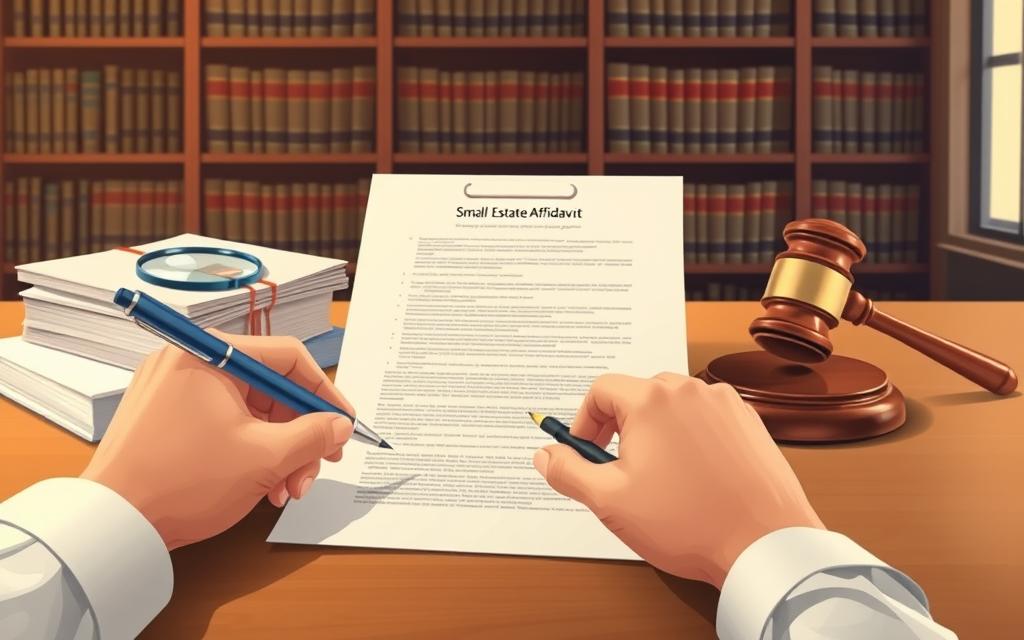
Understanding the small estate affidavit process can be tough. But, breaking it down step by step makes it easier. To file a small estate affidavit, you need to prepare well and pay attention to details.
Preparing the Affidavit
First, check if you can use a small estate affidavit. Each state has its own rules. You usually need to meet financial limits and have a close relationship to the person who died.
- Check state-specific requirements
- Determine your legal standing
- Confirm estate value meets small estate guidelines
Gathering Required Documents
To succeed, you need all the right papers. Get these important documents ready before you start:
- Death certificate
- Proof of relationship to deceased
- Inventory of estate assets
- Identification documents
- Valuation statements
Filing the Affidavit
The last step is to file your documents. Precision is key when filing your small estate affidavit. Most places need you to notarize it and follow certain rules.
Make sure all your info is correct to avoid delays. Some places let you file online, while others need you to go in person to the probate court.
Filing the Small Estate Affidavit
Filing for a court-free estate transfer can be easy. It helps you share out assets without going to court. This is great for families with small estates.
Where to File the Affidavit
Finding the right place to file is key. You usually file at:
- Local probate court
- County clerk’s office
- Specific court handling estate matters in your jurisdiction
Fees and Financial Considerations
Knowing the estate value is important. Filing costs vary by state. But, they’re often much less than traditional probate fees.
| State | Typical Filing Fee | Estate Value Limit |
|---|---|---|
| California | $45-$75 | $166,250 |
| Texas | $30-$50 | $75,000 |
| Florida | $40-$100 | $75,000 |
Pro tip: Always check local rules. They can change. Some places let you file online, saving time and money.
Getting help from a lawyer can be smart. They know how to handle tricky cases or special situations.
After Filing the Affidavit
After you file the small estate affidavit, you need to pay close attention. It’s important to know your rights and what to do next. The property claim form is key for getting back what’s yours without probate.
After you file, the court starts checking it. It’s important to keep track of how it’s going. This helps you get your inheritance fast and easy.
Reviewing the Affidavit Status
To track your small estate affidavit, follow these steps:
- Contact the local probate court directly
- Request a status update via phone or online portal
- Prepare identification documents for verification
- Check processing timeframes specific to your jurisdiction
Responding to Possible Rejections
Understanding your rights in small estates is key. Knowing why you might be rejected helps you move forward faster.
| Rejection Reason | Recommended Action |
|---|---|
| Incomplete Documentation | Submit missing paperwork immediately |
| Incorrect Property Valuation | Provide updated property assessment |
| Signature Discrepancies | Resubmit with correct signatures |
Talking to the court early can really help you succeed in getting your estate back without probate.
Distributing Assets
Understanding how to share assets through a small estate affidavit is key. It’s about knowing the legal steps and what the executor must do. The rules for small estates make it easier to move property without going to court for a long time.
Who Qualifies to Claim Assets
Who gets what is based on clear rules. Usually, the following can claim assets:
- Immediate family members
- Named beneficiaries in the will
- Legal heirs as determined by state law
- Creditors with valid claims against the estate
Executor’s Critical Responsibilities
The executor is very important in handling property transfers and estate recovery without probate. Their main tasks are:
- Identifying and valuing estate assets
- Paying outstanding debts
- Distributing remaining assets to rightful heirs
- Maintaining accurate financial records
Executors must follow state-specific regulations to ensure proper asset allocation and legal compliance. If they make mistakes, it can slow things down and cause legal issues for the heirs.
The small estate affidavit process helps families deal with estate matters quickly. It brings financial peace during hard times.
Common Mistakes to Avoid
Going through the small estate documents process can be hard. Many people face problems that could be avoided with good preparation. Knowing the common mistakes in the legal help small estate affidavit process is key for a smooth journey.
The affidavit process explained needs careful thought. There are several areas where mistakes often happen:
- Incomplete Personal Information
Not giving the right or full details can stop your small estate affidavit. Make sure all personal info is right and full.
- Documentation Gaps
Missing important documents can cause your application to be rejected right away. Get all needed papers before you file.
Signature Requirements
Signatures are very important in small estate documents. Not following the signature rules can lead to big legal problems.
- Make sure all needed people sign the document
- Check if the document is properly notarized
- Double-check where the signatures are placed
Documentation Precision
Being precise is very important when filling out a small estate affidavit. Even small mistakes can cause big delays in the legal help process. Getting help from a professional might be needed for complex estates to make sure everything is correct.
Here are some tips: Keep your records organized, know the rules of your state, and think about getting help from a legal expert who knows about estate documents.
Legal Requirements for Small Estate Affidavits
Understanding small estate affidavits needs careful attention to state rules. Each state has its own rules for these legal papers. It’s important to know the specific rules for managing small estates in your state.
The steps for small estate legal matters vary a lot. These steps usually cover a few main points:
- Estate value limits
- Assets that qualify
- Documents needed
- How to file
Understanding State Laws
States have different rules for small estate affidavits. Some important things to consider are:
- Maximum estate value – Can be from $25,000 to $150,000
- How long after someone dies
- Who can file
Importance of Legal Compliance
Getting legal help for small estate affidavits can avoid big mistakes. A professional can make sure you follow all state laws. This helps avoid delays or problems.
Not following local rules can lead to:
- Rejected affidavit submissions
- Longer legal fights
- Money fines
It’s key to prepare well and know the local laws for a smooth small estate affidavit process.
Alternative Methods to Claiming Property
After someone dies, it can be hard to deal with their property. Families look for ways to make things easier. They might use small estate affidavits or other methods to transfer property without a will.

Looking into a simpler way to transfer property means knowing different legal options. These options help when there’s no will:
- Revocable Living Trusts: Make a plan that lets assets go straight to the right people
- Joint Ownership with Right of Survivorship: Makes sure the property goes to the other owner automatically
- Transfer-on-Death Deeds: Let you pass on property without needing the court
Probate Process Overview
The usual probate process needs the court’s help to settle the estate. It can take a long time and cost a lot. So, families often look for quicker, cheaper ways to share out the assets.
Petition for Letters of Administration
If there’s no will, the court might appoint someone to handle the estate. This person, called an administrator, follows the state’s rules to divide up the assets.
| Method | Complexity | Cost |
|---|---|---|
| Living Trust | Low | Moderate |
| Joint Ownership | Very Low | Low |
| Letters of Administration | High | High |
Every way to transfer property has its own benefits. Talking to a lawyer can help find the best choice for your situation.
Frequently Asked Questions about Small Estate Affidavit
Understanding the small estate affidavit process can be tough. Many wonder how to handle a deceased person’s stuff. This section answers common questions to make things clearer.
Who Typically Qualifies for a Small Estate Affidavit?
Who can use a small estate affidavit varies by state. But, here are some main points:
- Total estate value is below a certain amount (usually $50,000-$150,000)
- No real estate or complicated assets are involved
- All debts are paid off
- Heirs are known
Understanding the Affidavit of Collection of Property
An affidavit of collection of property lets heirs get assets without probate. It makes it easier to transfer personal items when the estate meets certain rules.
Common Misconceptions Explained
Many people get the small estate affidavit process wrong. Here are some important facts:
- Not every small estate can use this easy process
- The rules change from state to state
- Some items might need formal probate
Key Considerations
When thinking about the small estate affidavit process, keep these things in mind:
- Time is important – most states have rules about when to start
- You need the right documents
- Talking to a local probate lawyer can help a lot
The small estate affidavit is a good way to manage small estates. But, it’s key to know the rules in your area. Each place has its own rules for who can use this process and how.
Final Notes on Small Estate Affidavit Process
Understanding the small estate procedure can be tough. But knowing the basics makes it easier. Knowing the estate value and legal rules helps move assets smoothly.
Getting a small estate affidavit right takes a few important steps. You need to check your situation and the laws. This makes sure you can transfer property without trouble.
Key Takeaways for Smooth Processing
- Check the estate value limit in your state
- Get all needed documents ready
- Know about legal issues
- Think about getting help from a lawyer for the affidavit
Resources for Additional Guidance
Getting help from a lawyer is very helpful. They know the law well and can make sure everything is right.
- Local probate court websites
- State legal aid groups
- Estate planning lawyers
- Online legal help sites
Being well-prepared and knowing the small estate affidavit process helps a lot. It makes transferring assets less stressful and less complicated.
Conclusion: Streamlining the Process
Going through the small estate affidavit process can be easy. It’s a quick way to get property without probate. It helps families avoid long estate settlement times.
By knowing the steps and what’s needed, heirs can make transferring assets simple. This way, they can avoid legal problems.
Preparation is Key
Getting ready is key for inheritance without probate. You need to collect the right documents and know your state’s rules. Also, fill out the small estate affidavit form correctly.
It’s important to check your state’s rules. This makes sure you follow all steps for easy asset transfer.
Final Thoughts on Asset Claiming
The small estate affidavit makes transferring assets easy for families. It saves time and money. But, you must be careful and detailed.
Getting help from a local lawyer can solve problems. They make sure you follow state laws.
The small estate affidavit is a great tool for families. It helps manage estate transfers smoothly. With the right preparation, heirs can get property and honor their loved ones’ wishes.



Leave a Reply